
Healing Beyond Survival: A Liberation-Based Approach to Trauma Recovery
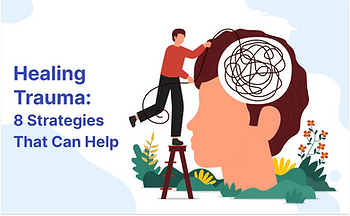
Trauma changes the way we experience ourselves, our relationships, and the world around us. Whether trauma stems from a single event or develops through ongoing experiences such as neglect, abuse, discrimination, violence, or systemic oppression, its effects often linger long after the original harm has occurred. Many people find themselves living in a constant state of survival, carrying emotional wounds that continue to influence their thoughts, behaviors, relationships, and sense of safety.
Like a physical injury, trauma does not heal simply because time has passed.
Healing requires attention. It requires space. It requires support.
Many of us learn to survive by avoiding painful memories, suppressing emotions, or disconnecting from parts of ourselves. While these strategies may help us get through difficult moments, they often make it harder to fully heal. Unprocessed trauma can show up in unexpected ways, including anxiety, depression, relationship difficulties, burnout, perfectionism, substance use, chronic stress, and feelings of disconnection from ourselves and others.
At According To Sykes, we view healing as more than symptom management. We believe that liberation from trauma involves reconnecting with ourselves, our communities, and our inherent capacity for healing, allowing us to move beyond survival and toward a more authentic and empowered life.
What Is Liberation-Based Healing?
Liberation-based healing recognizes that many forms of suffering do not occur in isolation.
Our emotional experiences are shaped not only by personal circumstances but also by families, communities, institutions, histories, and systems. Experiences of racism, sexism, homophobia, transphobia, ableism, poverty, displacement, and other forms of oppression can profoundly impact mental health and well-being.
Healing therefore involves more than learning coping skills.
It also involves examining the stories, beliefs, and systems that have shaped us. It asks us to consider what we have inherited, what we have internalized, and what we may need to unlearn in order to return to ourselves.
As we often say at According To Sykes, healing begins with remembering that we are more than what happened to us.
A Framework for Liberation from Trauma: Healing and Repair
The Decolonizing Wealth Project offers a powerful framework for healing and repair. While healing is rarely linear, the following practices can serve as guideposts along the journey:
Grieve
Allow yourself to acknowledge the losses, hurts, and injustices you have experienced.
Apologize
Take responsibility for harm you may have caused, recognizing that accountability is an important part of healing.
Listen
Seek out perspectives that have historically been ignored, excluded, or silenced.
Relate
Build authentic relationships rooted in curiosity, respect, and shared humanity.
Represent
Create spaces where diverse voices are not merely included but meaningfully empowered.
Invest
Align your resources, time, energy, and actions with your values.
Repair
Commit to healing harm where it exists and preventing future harm whenever possible.
These steps are not checkboxes. They are ongoing practices that invite us into deeper relationships with ourselves, our communities, and the world around us.
Returning to Connection
Many liberation-based healing traditions share a common belief: healing happens in relationship.
Relationship with ourselves.
Relationship with community.
Relationship with culture, ancestry, spirituality, and the natural world.
Long before modern psychotherapy existed, Indigenous communities around the world cultivated healing practices rooted in connection, reciprocity, storytelling, ceremony, collective care, and respect for the wisdom of elders. These traditions often understood wellness not as an individual pursuit, but as something deeply interconnected with family, community, land, and spirit.
Many Indigenous worldviews remind us that healing is not simply about reducing symptoms. It is about restoring balance. It is about remembering who we are, where we come from, and how we belong to something larger than ourselves.
This perspective stands in contrast to many dominant Western approaches that often prioritize individual achievement, independence, and productivity. While these approaches can offer valuable tools, they may overlook the importance of community, cultural identity, ancestral wisdom, and our relationship to the natural world.
At According To Sykes, we recognize that healing can take many forms. For some, healing may involve therapy and clinical support. For others, it may involve reconnecting with cultural traditions, spiritual practices, community spaces, storytelling, artistic expression, or time spent in nature.
Liberation-based healing invites us to broaden our understanding of what healing can look like. It encourages us to honor diverse ways of knowing and to recognize that wisdom exists both within and beyond traditional clinical settings.
In a society that often encourages isolation and self-sufficiency, choosing connection can be a radical act. Reconnecting with ourselves, our communities, and the traditions that sustain us can become an important part of the healing journey.
The Courage to Heal
Healing is not about erasing the past.
It is about creating a future where the past no longer dictates every aspect of our lives.
As Akshay Dubey writes:
“Healing doesn’t mean the damage never existed. It means the damage no longer controls our lives.”
Healing asks for courage. It asks for patience. It asks for compassion toward ourselves and others.
Most importantly, it asks us to believe that transformation is possible.
Beginning Your Journey
If you are carrying the effects of trauma, grief, oppression, or disconnection, know that you do not have to navigate healing alone.
At According To Sykes, we believe that healing happens when people are given space to be seen, heard, and supported. Through therapy, community, education, and collective care, we work to create spaces where liberation and healing can unfold together.
Your story is not defined by what happened to you.
Healing begins with the belief that something more is possible.


Comments